A format by Sturmfeder Projects
The Art of Becoming
Strategic leadership development through artistic transformation
Art begins where we lose the fear of simply starting.
“Creativity is just connecting things.”
The future needs new ways of thinking
In a business world full of data, information and stimuli, real competitive advantage no longer comes from knowledge alone, but from the ability to process information intuitively, creatively and with emotional intelligence. Artificial intelligence can speed up a great deal, but it cannot replace original creativity. In front of the white wall, genuine human creative power is called for. This one-day seminar uses art as a hands-on behavioural laboratory.
Developed for companies and leaders, this format combines artistic work with insights from leadership, positive psychology, resilience and personal development. A blank canvas becomes a symbol of an open business or personal challenge. The first brushstroke demands a decision. An unexpected splash of colour disrupts the original plan. Layers are built up, changed or discarded. The artistic process thus makes visible the situations that also shape leadership: tolerating uncertainty, making decisions, letting go of control, integrating mistakes and staying able to act despite incomplete information.
- Initial hesitation turns into action.
- A disruption becomes a new possibility.
- Control can turn into intuition.
- A single stroke develops into a personal signature.
01 — The day in four modules
The day in four modules
00
Introduction & orientation
Arriving, setting the scene and the scientific foundation in compact form. The white surface as a symbol of the next strategic challenge.
01
Starting
Letting go of perfectionism & activating the ability to act
The fear of wrong decisions, symbolised by the blank white surface, is broken through physically. Less procrastination, more initiative.
In the seminar
Priming the canvas on the floor and setting the first lines without lengthy planning.
02
Disruption
Disruption & tolerance of ambiguity
Unforeseeable loss of control becomes something you can experience in the safe space of the canvas. Composure and the ability to act in the face of budget cuts, market shifts or strategic upheaval. The “mistake” becomes a valuable impulse.
In the seminar
An unexpected impulse disrupts the plan. The disruption is built into the picture instead of being fought.
03
Flow
Flow & resilience to feedback
Trust in your own intuition, tolerance of frustration in sluggish project phases and the ability to separate criticism of the product from criticism of the person.
In the seminar
Deep work in layers, taking on impulses from outside and sharpening your own signature.
04
Presence
Presence & a lasting anchor
In the “leadership vernissage”, your own work becomes a visual manifesto of your leadership personality. Back in the office, the painting then acts as a lasting anchor for courage and the will to shape things.
In the seminar
A quiet walk through the finished works, a short pitch in front of your own painting and one concrete step for everyday working life.
A full seminar day with breaks. We agree the date and venue with you individually and are happy to present the detailed programme in person.
02 — What leaders experience
What leaders experience
- self-efficacy and decisiveness
- dealing with uncertainty and change
- creative problem-solving and new perspectives
- resilience and tolerance of ambiguity
- awareness of their own strengths and behaviour patterns
- intuition and emotional intelligence
- communication, presence and storytelling
- a more open culture of mistakes and innovation
The artistic process becomes a leadership laboratory.
03 — Art meets science
Art meets science
Overcoming limits
Through artistic work, participants learn to act more intuitively and to develop new perspectives.
Transfer to everyday work
Experiences from the creative process feed directly into leadership, communication and decision-making.
Lasting effect
Personal growth can have a positive impact on teams, corporate culture and business performance.
Creativity is not a talent. It is a natural process that anyone can activate.
04 — The scientific foundation
The scientific foundation
The seminar builds on established findings from positive psychology and research into motivation and leadership. Some examples:
PERMA modelMartin Seligman, 2011
Describes five pillars of well-being: positive emotion, engagement, relationships, meaning and accomplishment.
Broaden-and-build theoryBarbara Fredrickson, 1998/2001
Positive emotions briefly broaden thinking and action and so help to build lasting personal resources.
Growth mindsetCarol Dweck, 2006
People who believe abilities can be developed deal more constructively with mistakes and challenges.
Psychological safetyAmy Edmondson, 1999
Teams learn better when mistakes, questions and concerns can be raised without fear of negative consequences.
Show all sources (16)
- Seligman, M. E. P. (2011). Flourish: A Visionary New Understanding of Happiness and Well-being. New York: Free Press.
- Fredrickson, B. L. (1998). What good are positive emotions? Review of General Psychology, 2(3), 300–319.
- Fredrickson, B. L. (2001). The role of positive emotions in positive psychology: The broaden-and-build theory of positive emotions. American Psychologist, 56(3), 218–226.
- Amabile, T. M. (1996). Creativity in Context. Boulder: Westview Press.
- Deci, E. L. & Ryan, R. M. (1985). Intrinsic Motivation and Self-Determination in Human Behavior. New York: Plenum.
- Ryan, R. M. & Deci, E. L. (2000). Self-determination theory and the facilitation of intrinsic motivation, social development, and well-being. American Psychologist, 55(1), 68–78.
- Dweck, C. S. (2006). Mindset: The New Psychology of Success. New York: Random House.
- Frenkel-Brunswik, E. (1949). Intolerance of ambiguity as an emotional and perceptual personality variable. Journal of Personality, 18(1), 108–143.
- Budner, S. (1962). Intolerance of ambiguity as a personality variable. Journal of Personality, 30(1), 29–50.
- Lazarus, R. S. & Folkman, S. (1984). Stress, Appraisal, and Coping. New York: Springer.
- Csikszentmihalyi, M. (1975). Beyond Boredom and Anxiety. San Francisco: Jossey-Bass.
- Csikszentmihalyi, M. (1990). Flow: The Psychology of Optimal Experience. New York: Harper & Row.
- Edmondson, A. (1999). Psychological safety and learning behavior in work teams. Administrative Science Quarterly, 44(2), 350–383.
- Bandura, A. (1977). Self-efficacy: Toward a unifying theory of behavioral change. Psychological Review, 84(2), 191–215.
- Bandura, A. (1997). Self-Efficacy: The Exercise of Control. New York: W. H. Freeman.
- Avolio, B. J. & Gardner, W. L. (2005). Authentic leadership development: Getting to the root of positive forms of leadership. The Leadership Quarterly, 16(3), 315–338.
05 — Key facts
Key facts
- 1 day
- bookable individually
- no previous experience needed
- in-house or at special venues
06 — Bringing two worlds together
Bringing two worlds together
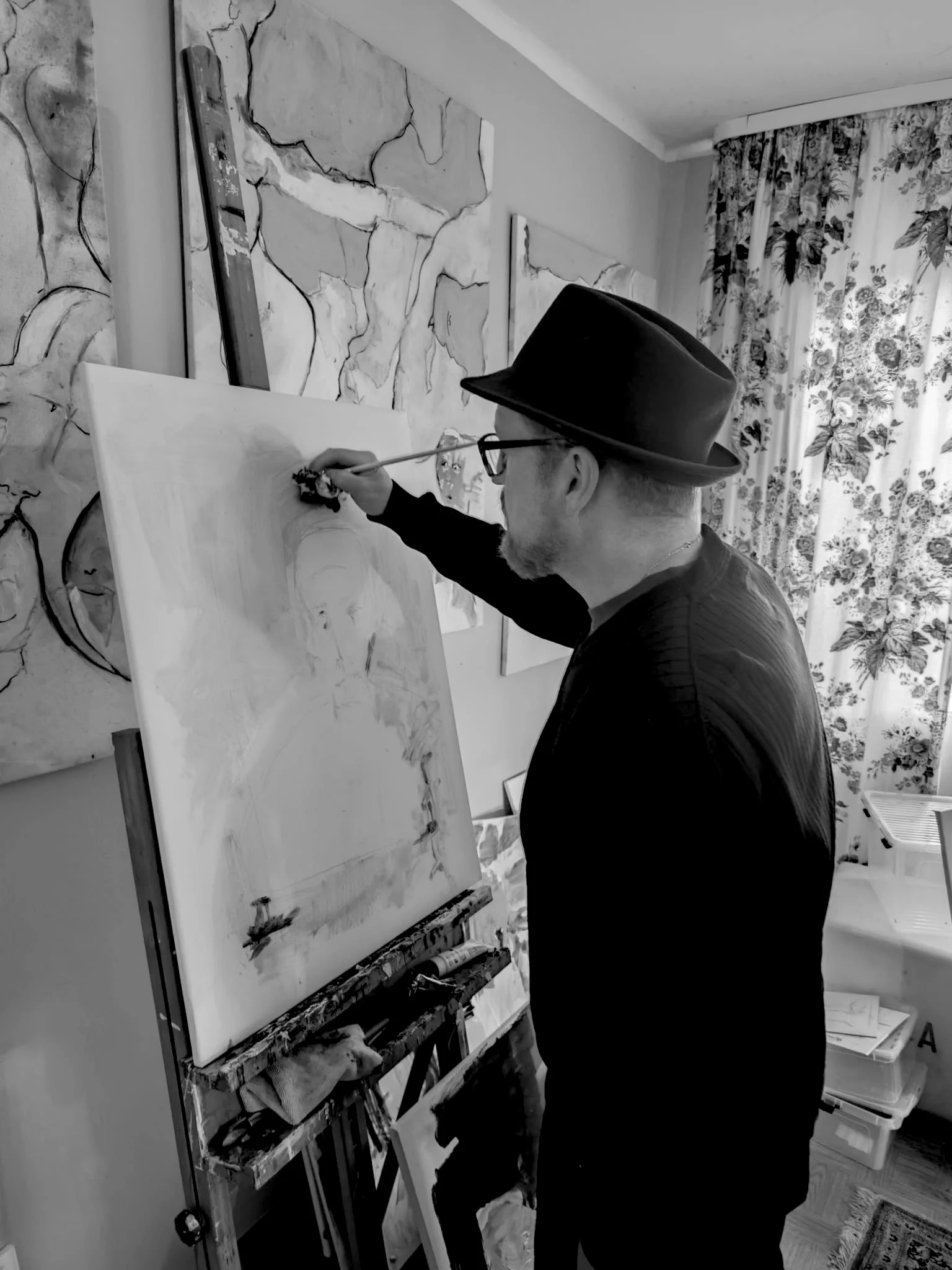
Stephan Graf Bentzel-Sturmfeder
Artistic practice
More than 30 years of artistic experience, art history and a deep understanding of creative processes that broaden perception and sharpen instincts.
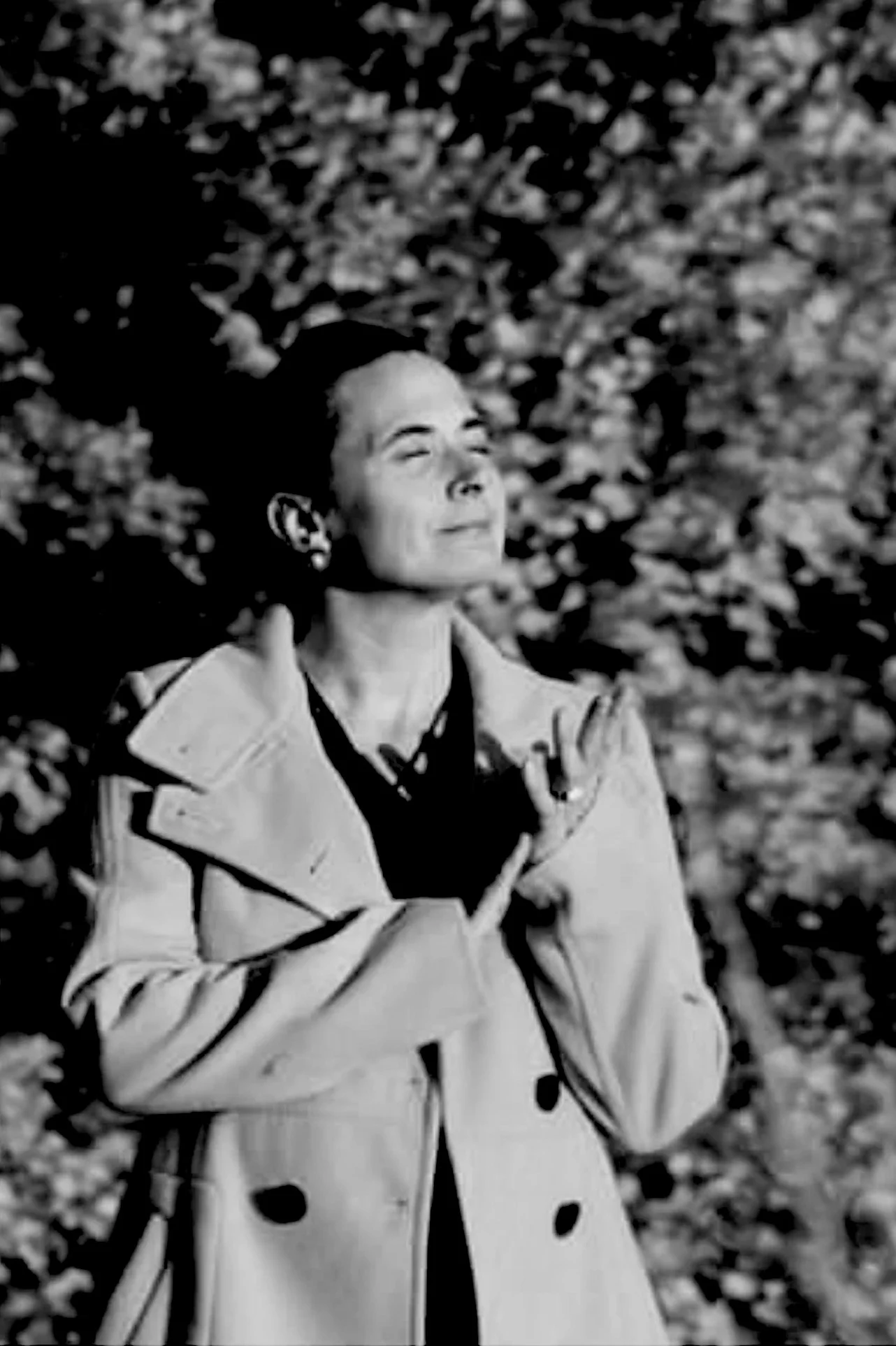
Antonie Höldrich
Psychological transfer & concept
Systemic coaching, psychology, neuroscience and resilience research. She translates creative processes into a business context.
07 — Upcoming dates
Upcoming dates
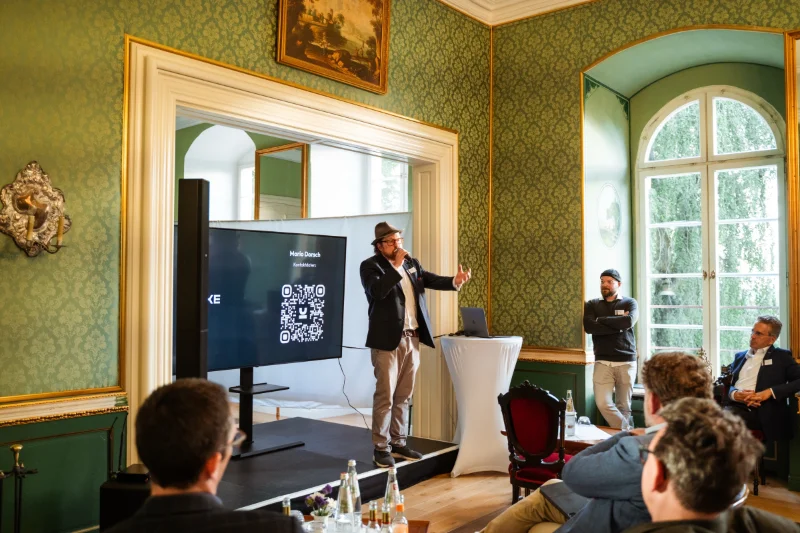
Talk to us.
In a personal conversation we will develop an individual concept with you and explain the steps of the seminar.
- Phone
- +49 177 4346401